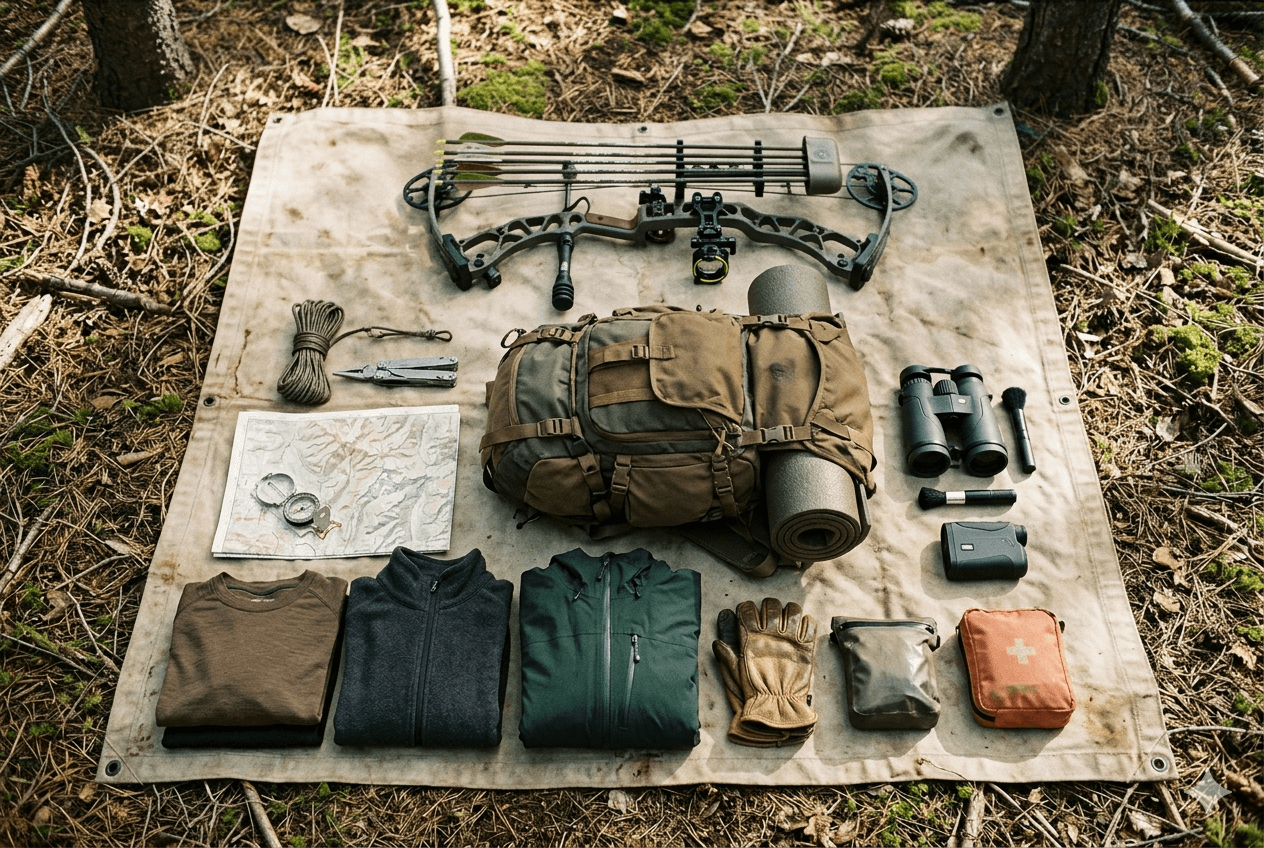
The rut changes everything. Deer that spent months being nocturnal and predictable start making mistakes. Your job is to be in the right place to take advantage of those mistakes — and that starts with reading what the woods are telling you.
Rubs: More Than Just Sign
Not all rubs are equal. A fresh rub on a 4-inch sapling tells you a buck passed through. A line of rubs along a ridge tells you something about his travel pattern. A cluster of rubs near a field edge tells you where he's staging before dark.
Pay attention to the height of the rub and the size of the tree. Big bucks tend to work bigger trees. A sequence of rubs in one direction tells you the direction of travel.
Scrapes and the Licking Branch
The licking branch above the scrape is what matters — bucks work it more consistently than the scrape itself, and they'll hit it outside of primary scrape season too. Find a licking branch with a worn scrape beneath it and you've found a communication hub.
Primary scrapes along field edges and trail intersections stay active through the rut. Random scrapes in the timber are often one-time events.
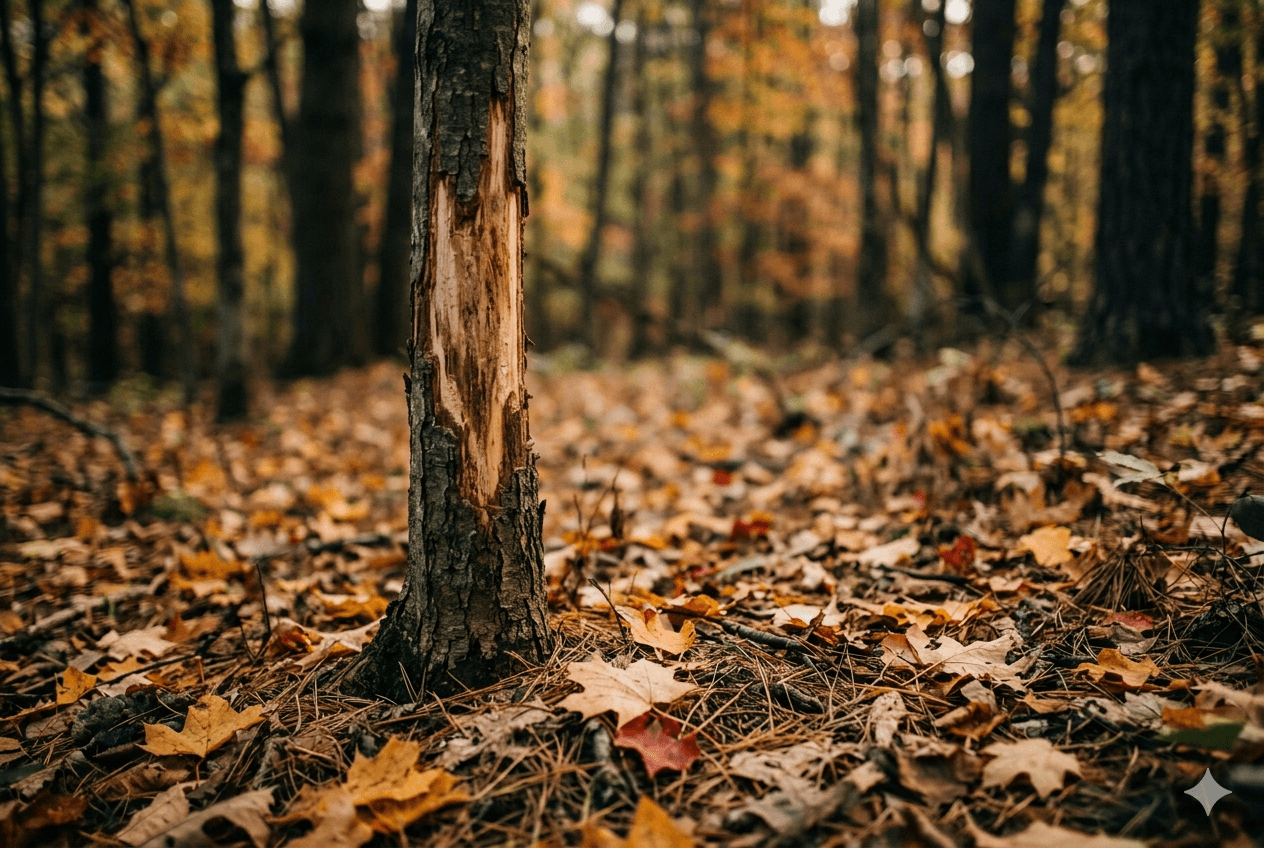 A quiet autumn morning in the timber
Trails During the Rut
Deer abandon their normal patterns during peak rut. The doe trails become the buck trails. Find where the does are feeding and bedding, and you'll find bucks cruising through at daylight.
Pinch points — funnels between bedding areas, creek crossings, saddles on ridges — concentrate movement when bucks are covering ground looking for does.
When to Be in the Stand
The two weeks around peak rut are the only time I consistently hunt midday. Bucks are moving all day. If you can sit from first light to last light during that window, do it. The buck you're hunting is probably doing the same.