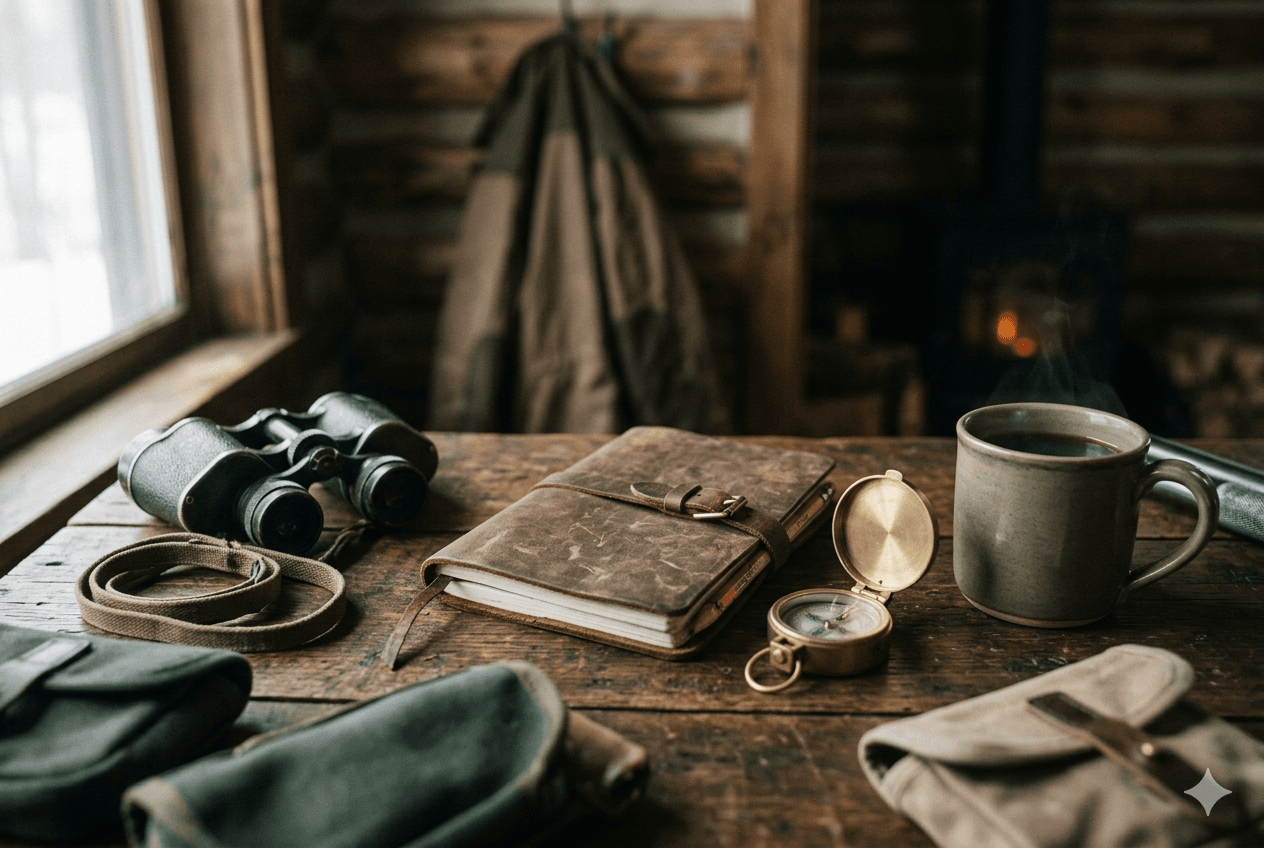
Ten days in the backcountry will expose every weak link in your kit. After a couple of seasons of trial and error, here's what I've learned actually matters versus what just adds weight.
The Non-Negotiables
Pack weight is everything. Every pound you carry out is a pound you carry back — plus whatever you harvest. Start there and work backwards.
Layering system over a single heavy jacket. Conditions shift fast in elk country. A base layer, insulating mid-layer, and hardshell give you options. One heavy coat gives you one option.
Boots you've broken in before the season. This seems obvious but it's where people get hurt. New boots in the backcountry means blisters on day two and a compromised hunt from there.
A reliable rangefinder. Shot distances in timber and open country vary wildly. Guessing is how you wound animals.
What I Cut From My Kit
- The camp chair (a stuff sack works)
- Extra camp clothes (one set, worn into camp and out)
- The "just in case" items that never get used
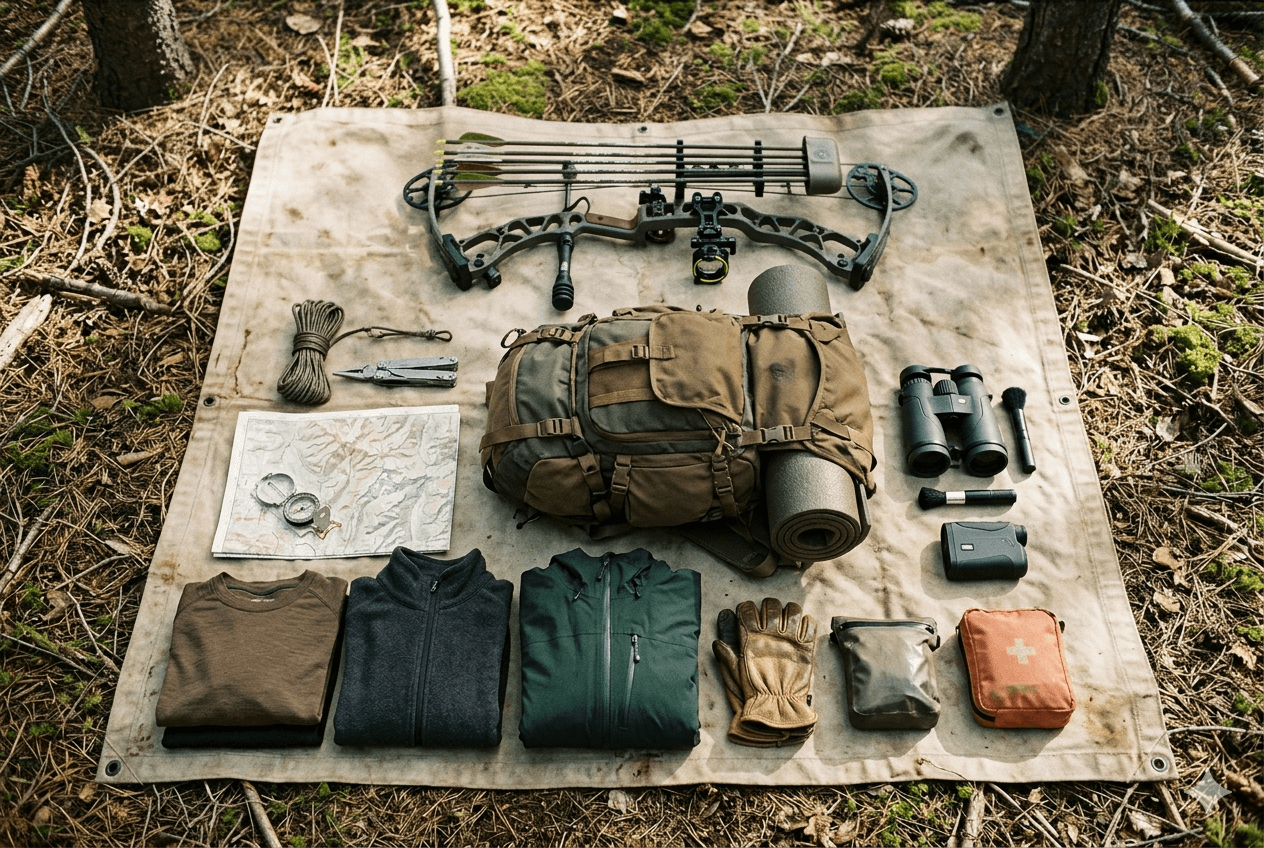 Hunting gear laid flat before packing
The Stuff Nobody Talks About
Sleep is your performance variable. Your pack, your bow, your rangefinder — none of it matters if you're running on four hours a night. Invest in a sleeping setup rated 10–15° below what you expect. You'll thank yourself at 2 a.m. when the temperature drops.
Bring a paper topo in addition to your GPS. Electronics fail. Batteries die. Paper doesn't.
The Bottom Line
Simplify. The best elk hunters I've been around carry less than you'd expect and know their gear inside and out. Gear is a tool, not a guarantee.